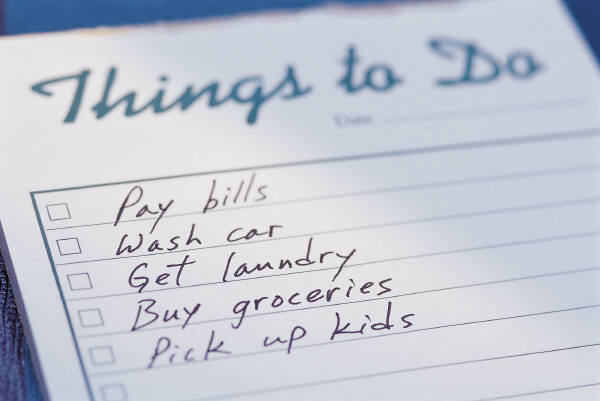
We are conditioned both deliberately and accidentally throughout life

As we go through life we learn a vast amount of things, and we start from the very moment we are born (some say before we are born, and they may well be right).

We are conditioned deliberately in some cases, and accidentally in others.  Deliberate conditioning often comes from our parents/guardians, from religious leaders, from teachers, group leaders such as Akela in scouts, Brown Owl in Brownies etc.

We learn how to eat our food, when to eat our food. We learn the boundaries we must adhere to in school, such as when playtime is, where we have to sit to do our work, what work we have to do, when we can talk and when we must be quiet.

Brownies are conditioned to learn new skills to gain the badges that are liberally sewn on to their sashes, and likewise with scouts.

We are conditioned to go to bed at certain times, to get up at certain times, to be seen and not heard, to not answer back, to not talk when the adults are talking, to do our homework and a million other things too.

We can be conditioned by relatives, partners, children and many other sources to behave in a particular way.  Some of those ways are for our own safety and some of them are for control of you.  You have to decide which is which.

iStock_000001171305XSmall

Accidental conditioning can come from anywhere.  For instance, a young couple got married and the new wife decided to cook a Sunday roast.  She got her leg of lamb from the butcher and broke the top part of the leg bone and put it in a roasting tin.  He new husband asked her why she broke the bone and the new wife replied ‘that’s what my mum does’.

A few weeks later the newly weds went to the new wife’s mum’s house for Sunday dinner.  The mum had got lamb and she got the joint and broke the top part of the bone and put it in the roasting tin.  Her son-in-law asked her why she did that and she replied ‘ that’s what my mum does’.

A few months down the line and the newly weds go to Grandma’s for Sunday lunch.  The new husband tells Grandma about his wife and her mother breaking the bone of the leg of lamb and explained how they said they did it because Grandma does it.  Grandma laughed and said ‘Oh, do they still do that? I only did that because I didn’t have a roasting tin big enough’, and she laughed. She had accidentally conditioned her daughter who had accidentally conditioned her daughter.

roastlamb

Think about the conditioning you have had throughout your life.  Is it still relevant now?  Do you have to do things in the same way or can you change the way you do some things?  Do you want to change things or are you happy with the way they are?

If this resonates with you, and you would like to learn more and how I can help you,  get in touch with me today. I would like to hear from you.

Maggie Currie

maggieheart
Transformational Coach, Consultant
Founder of MAGGIE CURRIE COACHING

Website:       http://www.maggiecurrie.co.uk

Facebook:    https://www.facebook.com/maggielifecoach/

Email:            hello@maggiecurrie.co.uk

 

How to have a stress free Christmas

We all know that Christmas can be stressful.  There is the usual invasion by the family, and extended family, the standing on ceremony all day, the extra expense as well as time and frustration trying to get the Christmas dinner on the table on time.

So much to do – presents to buy, cards to write, people to see, meals to cook, worrying about money.  Panic sets in.  Then there is the worry that there are not enough hours in the week.

Perhaps you perceive that you organise everything all on your own, without appreciation, and you also perceive there is a whole lot of expectation too from those around you.  That doesn’t sound like much fun to me.  And yet it is a scenario that is described over and over again.

Is it really the case though?  Do YOU have to organise everything? Are YOU expected to do it all? Is this something YOU think you ought to do?

If you think it is something you ought to do, think again.  There are no oughts allowed. We aren’t living in the nineteenth or even the twentieth century now, we are living in the twenty first century – it is time for YOU to start looking at what it is YOU want to happen at Christmas, when YOU want it to happen, who YOU want to celebrate with, who YOU don’t want to celebrate with, whether YOU want to celebrate it at all, whether YOU want to cook a roast dinner with all the trimmings or not, whether YOU want to go to a restaurant for Christmas dinner and so on.

christmasstress

Perhaps you wonder what others will think of you if you break with tradition.  Stop wondering, be true to yourself, if the traditions are still relevant to you then by all means carry on with them, but if they are not relevant then stop following them.

Ask yourself how much of your planning for Christmas is led by guilt.  Be honest and try to weed out unnecessary obligations to lessen your load.

For instance, is it the norm for your relatives to all come to your house for Christmas dinner?  Do they expect you to invite them? Do you do all the food shopping, all the cooking?

Is this what YOU and they really want?  Have you had ‘the conversation’ regarding who really wants to do what on Christmas day?  It really isn’t a difficult conversation to have.

For instance, I asked my mother a couple of years ago if she wanted to spend Christmas with me or with my brother as she usually divided her time between us.  She said she would rather go on a tinsel and turkey trip with her friend and that is what she did.  She had fun, I wasn’t obligated and I could do what I wanted which was have a quiet Christmas at home with my husband.

christmas-dining-table

I know someone who went every weekend for five years to his father’s for Sunday lunch.  He packed up his car with his children and his wife and took the ferry to the mainland because he perceived this is what was expected of him.  He was beginning to resent these trips, which took up most of the day, and resent his father.

I asked him if he had had ‘the conversation’ with his father about having Sunday lunch with him every week.  He said no, but that he would.  He came back to me a few weeks later and said that his father was hugely relieved as he was getting fed up cooking a roast dinner each week, sometimes he just wanted to sit down with a sandwich, a glass of beer and watch the rugby.  They agreed to have lunch together once a month.  He got most of his Sundays back and he could do more things with his wife and children.

So do the same thing about Christmas.  Ask your relatives if they actually want to come to you this Christmas.  Don’t be surprised if they are relieved that you have asked.  You will probably find that you will have an easier time, with far less stress, with just as much fun, but fun that you want to have and not fun that is manufactured out of guilt.

What do YOU want for your Christmas? How do YOU want to look on Christmas day, worn our and resentful, or relaxed and enjoying yourself?

Festive Woman in Red Santa Hat

Budget for what you can afford to spend and stick to it.  Try and spread the cost of present shopping over a longer period. Consider a simpler version of Christmas dinner such as a buffet where everyone you choose to invite brings a plate of food.  Consider whether you are prepared to tolerate family tensions over Christmas, if not make the decision to have ‘the conversation’ with everyone concerned.

Remember, be the result of your decisions not of circumstances.

If this resonates with you, and you would like to learn more about my work,  get in touch with me today. I would like to hear from you.

Maggie Currie

maggieheart
Transformational Coach, Consultant
Founder of MAGGIE CURRIE COACHING

Website:       http://www.maggiecurrie.co.uk

Facebook:    https://www.facebook.com/maggielifecoach/

Email:            hello@maggiecurrie.co.uk

Making time for YOU!

My clients often tell me that one of the added benefits of coaching they hadn’t considered before they started, is that their coaching session can often be the only time in a busy week that they feel able to step back and truly focus 100% on themselves.  Hand on heart, how often could you say that you allow yourself to do that?

A lot of the time we get so busy ‘doing’ that we forget about ‘being’.

This was a revelation of sorts for me some years back.  I had something fantastically inspiring to aim for, I had the focus and drive to work really hard and I was making good progress.  And yet, I wound up feeling ill, stressed and fairly disillusioned.  If this was what having stretching goals was about, I wasn’t sure I wanted them after all!

Talking through how I felt with a friend one day, I was brought up short when she said “oh yes, you’ve become a human doing instead of a human being” .  That comment really resonated with me and I thought about it all the way home.

As I reflected on the previous few months I could think of few times when I wasn’t ‘doing’ and even fewer times when I’d consciously decided to take time out and ‘be’.

So how much of your time do you spend ‘doing’ and how much do you spend ‘being’?   If you had to divide a circle up with how much time you give over to each, what would it look like?  How big would your ‘being’ slice be?

piechart

With our busy lives and time-poor society it can seem impossible to take more time for ourselves, but at what cost do you choose not to?  My decision those few years back was to invest more time in myself and I’m certain that I’m much more productive as a result.  I get more done in my ‘doing’ time now than I ever did when I was ‘doing’ every waking second of the day.  Plus, my ultimate decision was that it couldn’t all be about the doing and the destination or I’d miss the journey altogether.

So what time could you make for yourself to ‘be’?  To listen to your thoughts and feel your feelings.  When could you next set aside an hour or two, a whole day or even more than that to relax and recharge?  Can you set aside fifteen minutes a day to sit and have a cup of tea or coffee, relax and be you.  How much better would you feel if you did?

Could you do with some regular time set aside to focus 100% on you and on making your life how you want it? If so, what are you prepared to commit to?

concept

Learn to live your life more simply.  We all have around 80,000 thoughts a day, but we don’t have to listen to or believe them all.  Which are the thoughts that give you a nice feeling?  Which are the thoughts that you don’t like?  Have you considered that you are only one thought away from a lovely feeling and a more peaceful life?

Have you got so lost in the process of life that you have forgotten how to be you?  Would you like to have a conversation to discuss this further? Get in touch today.

Maggie Currie

maggieheart
Transformational Coach, Consultant
Founder of MAGGIE CURRIE COACHING

Website:       http://www.maggiecurrie.co.uk

Facebook:    https://www.facebook.com/Maggie-Currie-Coaching-527886050648208/?ref=hl
Email:            hello@maggiecurrie.co.uk

Putting ‘You’ first

Do you remember travelling on a plane?  If you do, you have probably heard the instructions of the cabin crew reminding you to put on your own oxygen mask before helping anyone else with theirs. This advice is often told as a story for self-care because it expresses accurately why it is so important.

A woman was travelling on a plane with her twin 4 year old daughters.  The safety message clearly stated that should there be an emergency the oxygen masks would drop down.  Passengers were instructed to ensure they fitted their own masks before going to aid anyone else.

oxygen masks

There was an emergency, the oxygen masks fell.  The mother tried to fit a mask on one of her daughters, who wriggled and screamed and so she failed.  She tried to fit a mask on her other daughter with the same effect.  By the time she had unsuccessfully tried to fix their masks in place she had lost consciousness.  They too lost consciousness.  Sadly they all died.

This is why it is so important to look after you first.  To put your metaphorical oxygen mask on first.  So that if there are problems with helping others, you are still alive to keep on helping.

There are very few situations in your daily life that mimic the wake-up call of a plane emergency, so it’s very easy to keep putting off self-care.  Easy, that is, until you get ill, overwhelmed or physically exhausted, and suddenly you don’t have the energy to care for the people who count on you.  That’s when you realise that you haven’t been caring for yourself. It begins to dawn on you that taking care of yourself is not selfish or indulgent; it’s just plain practical.

Putting yourself first means that it might be necessary to say no to someone else in order to say yes to yourself.  For many of you, that is the point where guilt kicks in and you feel you could or should be doing something for someone else.  Keep in mind the oxygen mask metaphor.

concept

You can encourage yourself by saying “I am caring for myself so that I can care for others” or any other sentence or phrase that you find encouraging.  It will also help you if you remember that self-care doesn’t have to be very time-consuming. In fact, the best prescription for taking care of yourself probably means small, daily rituals; for example, taking a half-hour for yourself at the beginning and/or end of each day to meditate or journal, think or read or just be. You may also like to transform your daily shower or bath into a half-hour self-pampering session occasionally.

Whatever you decide is right for you, making that small gesture where you put yourself first every day will pay off  hugely for you and the ones you love.

Putting yourself first is not selfish, it is vital; you just need to be reminded how important you are to you and everyone else.

Maggie Currie

maggieheart
Consultant, Coach, Author
Founder of MAGGIE CURRIE COACHING

Website:       http://www.maggiecurrie.co.uk

Facebook:    https://www.facebook.com/Maggie-Currie-Coaching-527886050648208/?ref=hl
Email:            hello@maggiecurrie.co.uk

Refocusing after setbacks

How many times have you thought you were getting through a life trauma, or you are in the aftermath, and then you hit a setback and it seems that you went back to the way you were? I know I have.

Don’t worry, you are not the only one!  Setbacks and difficulties occur all of the time – they are a natural activity of life. It really doesn’t feel like that at the time.

There are two ways of facing difficulties. You can either change or alter the difficulty, or you can alter yourself to be able to deal with it.

Deal with difficulties correctly and you will enhance your confidence, deal with them incorrectly and you can do some serious damage to your feelings of self worth.

worried

When you are faced with any setback your ability to deal with it can be turned around into a position of strength by asking yourself positive empowering questions.  There is an unwritten rule that says:

‘Ask your mind a stupid question and you will get a stupid answer!’

So, if after a setback you ask yourself something like “Why does this always happen to me, I never have any luck?” That little voice inside your head will probably come out with:

“Because you are useless and good things do not happen to you!”

Sound familiar?

Instead, if you ask yourself a positive empowering question like:

“What did I learn from this setback that will help me the next time?”

Your little voice inside your head will be silenced and you will kick into solution mode.

Here are some rules and things to think about when setbacks do occur:

  • Acknowledge that it has happened. Don’t hide from it. These things happen. So what?
  • What positive empowering questions can you ask yourself?
  • What is good about this situation? There is always something good in any situation, you just have to find it.
  • How can I make the most of this situation?
  • What can I/did I learn from it?
  • What are the facts about this problem?
  • How can I make it a successful outcome?

iStock_000004524893XSmall (2)

Acknowledge that setbacks occur to everyone and you are not being singled out. View them as a challenge to overcome rather than an issue or problem.

Think about those negative dis-empowering thoughts that you think on a regular basis after a setback.  The ones that little voice keeps nagging you about.

What new empowering questions could you ask yourself to give yourself some better answers?

Write them down now and make them become a habit.

If this is something that interests you and is something you would like to experience by working with me, get in touch today.  I will be delighted to chat to you about how I will support you through the changes you want to make.  I will deliver the goods and help you get the results you want.  It’s time to really invest in yourself.
I look forward to hearing from you soon.

Maggie Currie

maggieheart
Coach, Mentor, Consultant, Speaker, Author, Survivor
Founder of MAGGIE CURRIE COACHING

Website:       http://www.maggiecurrie.co.uk

Facebook:    https://goo.gl/ZByKGW
Email:            hello@maggiecurrie.co.uk
Improve your body language, improve your confidence!

The way that you move your body, and how you walk has an enormous effect on the way that you feel and affects your confidence levels.

Lets start with an exercise.

Imagine there are two people standing in front of you – one with “negative body language” and one with “positive body language”.

??????????????????????                                                            teenage depression - teen woman sitting thinking

I’d now like you to write down what you are observing with each of these people:

Positive                                                                                                                                        Negative

  • How are they standing?
  • Where are their eyes looking?
  • What position are they holding their head?
  • How are they talking?
  • How are they moving?

How you feel at any moment in time is linked to what is going on in your mind and how you are moving your body. The way that you move sends subconscious messages to your mind and this either helps or hinders the way that you feel.

Emotion is created by motion. If you sit still for a long period of time your natural energy levels automatically get lower. And what happens when you get up, walk around and return to your seat?  Yes, you have more energy and you’re given a boost.

I can’t stress how important it is to move and act confidently and positively. You will give off all the right vibes to everyone around you and it will make them think that you are confident even if you’re not feeling it inside. Yes, that’s right. Even if you’re not feeling confident, act as though you are.

So, how do you do this?

  • Walk swiftly and with a purpose. Don’t saunter along, walk like you know exactly where you are going and when you get there you mean business!
  • Gesture with your hands as you talk, it will create motion and you know what that leads to – EMOTION! The right gestures also have a major impact on building rapport as long as you’re not shaking your fist!
  • All it takes is a smile!  Think for a moment about your confidence role model. One thing that he/she and confident people in general have in common is that they all probably smile a lot and are happier than their negative counterparts. It may sound silly, but there is a lot of power associated with a smile.

Start smiling more often. Now, that doesn’t mean that you have to walk around with a silly grin on your face all of the time. But smile as you walk down the street, when you talk to someone, even when you look in the mirror at yourself. You will be surprised at how much better you will feel for it, and it will project a positive image to all others – one that will attract opportunities and people.

iStock_000006933714Medium (2)

Remember that confident people are happy people and negative people are not. Happy people are also seen as more attractive than unhappy and sad people so that is an added bonus!

You know, the way that we communicate in our appearance, posture, gesture, gaze and expression can be such a powerful tool in the way that we feel and when communicating with others. The manner in which you communicate and your interpersonal skills are also very important indeed. Effective communication is vital if you are going to succeed no matter what you are doing.

The way in which we communicate with people is broken down into component parts, and it is popularly believed that people to whom we are speaking understand what we say by interpreting these different elements in varying proportions:

VERBAL – 7% of our message is interpreted from the words we use.

VOCAL – 38% is picked up from our voice – speed, tone , pitch, rhythm etc

VISUAL – 55% is what the other person sees – our body language

Please bear the above in mind when you are communicating to people.

If you are ever feeling down, just have a look at your body language and change it immediately. Even if it has to be false – YOU WILL start to feel better and more confident immediately.

First impressions count – notice body language. You can normally tell what others are feeling by the way that they are moving and using their body too. You can use this to your advantage when you are more aware of it.

Maggie Currie

Thought Leader, Coach, Speaker, Author, Survivor
Founder of MAGGIE CURRIE COACHING

maggieheart
Website:       http://www.maggiecurrie.co.uk

Facebook:    https://goo.gl/ZByKGW
Email:            hello@maggiecurrie.co.uk
Do you know where your beliefs and values come from?

Whether you realise it or not, you are constantly in the process of creating and changing your reality.

You are not truly aware of what someone else’s reality really looks like, and they are not truly aware of what your reality looks like. You are only aware of your own reality and how it looks to you.

Don’t believe me?  Take a simple scenario.  A road traffic accident, where nobody is hurt, fortunately, when one car hits another car.  There are three witnesses.  A policeman will ask each witness what he or she saw.  There will be three completely different perceptions of the same incident.

car

For instance, one person might state that they saw the first car brake suddenly, so the driver of the car behind (being far too close in their perception) braked really hard but the car was going too fast and ran into the car in front with a loud bang.

The second person saw the second car approaching the car in front too fast and the driver didn’t appear to even see the car in front and ran straight into it without braking.

The third person witnessed the first car slow down too much so the driver of the car behind (which wasn’t going too fast) couldn’t quite stop in time (though they tried) and hit the car in front really hard.

Three different perceptions of the same accident – each quite ‘real’ to those witnesses – but significantly dissimilar.

How you perceive your life and everything around you will differ dramatically from other people’s perceptions.  Your reality is totally unique to you.

How you think about your life, how you see yourself in the mirror, and what you believe is happening to you at any given moment, will be the reality that exists for you.

So what are your beliefs?  They are your views, judgments, guiding principles and decisions about yourself, family and friends, communities, organisations, employers and everything else you come into contact with.

Your beliefs filter everything you see, hear and feel around you and, as a result, determine the meaning you attach to any event. Your beliefs act as self-fulfilling prophecies. If you think that you can’t do something and then find it extremely difficult to do and give up trying, you have successfully fulfilled your belief that you can’t do it.

What would have happened if you had believed that you could do it?  Would your reality have been different?

Your beliefs, whether they be limiting or empowering, determine your actions, and your actions in turn verify your beliefs. Over time, as you collect more evidence to prove your beliefs, your beliefs become your reality.

Your beliefs operate in your subconscious mind and influence your conscious mind,  they affect your thoughts and behaviour. Whilst you are aware of many of your beliefs, in general, your most influential beliefs are stored away in your subconscious mind.


There are some beliefs you view as absolute truths and never question – that is just the way the world is! A change in your beliefs can have a major impact on how you live your life and the behaviours you manifest.

Once you believe in something, you tend to ignore opposite examples and accept only those events that reinforce that belief.

As Henry Ford, industrialist, said: ‘Whether you believe you can or believe you can’t, you are probably right.’

How right he was.

Your beliefs can have a significant effect on your life, particularly your health.

To quote Ian McDermott and Joseph O’Connor, from their book NLP and Health, (Thorsons, 1996), in a typical clinical situation, about thirty-five percent of all cases receive as much pain relief from a placebo as from morphine – simply because the recipients believe it will work.’

That is a very interesting observation isn’t it?  The subconscious mind believed it had been given a strong painkiller, and therefore the pain was relieved.  This happened because the subconscious mind cannot tell the difference between the truth and anything else it is told.

But what about your beliefs?  How can you verify them?

Well, many hundreds of years ago people were told, and believed, that the world was flat. Today there are probably still some people who continue to believe this. It is easy to see how this belief was once so prevalent.  Just look at the ground beneath your feet – it’s flat.  In the distance you may be able to see a few hills and valleys, but these are just ripples on an otherwise flat surface. All of the land is surrounded by water and it seems quite logical to have once believed that if you sailed far enough you would eventually fall off the edge of the world. Those who set off to sail the seas and never returned were testament to this.  Obviously those who did return, just hadn’t sailed far enough!

flat world

You will have noticed how this belief proved its own validity. Therefore that reality was true.

The flat-world belief was very useful in explaining and predicting phenomena in a very small area when there were no satellites, there was no television and there were no news broadcasts and no other means of communication other than verbal messages passed from one individual to another. More importantly, it made the people in that localised area feel comfortable and safe in this reality.  However, by discouraging wider exploration, it was also a very limiting belief.

But you can challenge this belief and put your life ‘at risk’. You can let go of the limiting belief of a flat world and explore other possibilities.  You can entertain new and more expansive beliefs, which other people may view as equally limiting or indeed as impossible. All these beliefs are equally valid.

Do you currently have beliefs that keep your reality comfortable and safe and that prevent you from exploring your true potential?  Do you choose to acknowledge only the reality that is predicted by your limiting beliefs and then use these observations as proof that your current reality is indeed true?

Is it time to step out of your comfort zone and set sail into the unknown?  To push the boundaries of what you think you know and discover new lands and opportunities – to challenge yourself to create your new reality?

Does that sound like something you would like to experience? I work with clients face-t0-face, on the phone and via Skype.  The choice is yours. You have everything to gain and nothing to lose. Contact me today for a free chat on how we can start moving you from a place that is not so great in your life to a place of enjoyment.


Maggie Currie

Email: hello@maggiecurrie.co.uk

Follow me on:

Website

Facebook

Twitter

LinkedIn

Huffington Post