Celebrating success

Have you ever noticed  how terrible we can be at acknowledging what we have achieved?  When congratulated on a success, we might hear ourselves say “oh it was nothing”.  On reaching a goal, we might skip the celebration because there is something else to strive for now.  When reviewing a half completed ‘to do’ list, we’ll bemoan what we didn’t do, rather than focus on how much we actually achieved.

Is this because we’re modest to the extreme, or do we simply not recognise just how much we do day to day, month to month, year to year?

I think it’s the latter.  We either don’t recognise how much we do, or we don’t see how important every step we’ve taken is.  We don’t see our progress as an achievement.

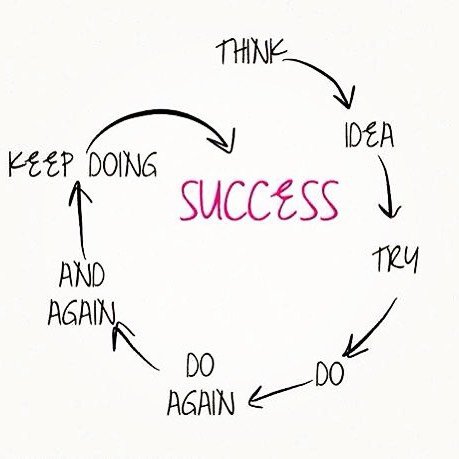
success

As the frequently quoted saying goes “a journey of a thousand miles starts with a single step”.  So if every step is progress, then in my book every step is an achievement.  What if we were to give ourselves more credit for everything we achieve?

Ticking things off a ‘to do’ list might not seem as celebration-worthy as representing your country in a chosen sport, but if it takes you closer to your own personal success then it’s a point scored in your own game!  So take that moment to acknowledge your progress.  When you reach a milestone, give yourself a reward.  And when you achieve what you were aiming for, seriously celebrate your success!

The energy gain from this change in perspective can be massive! I’m certainly more productive when operating from a mindset of ‘look how much closer I am to my objective and how much I’ve achieved!’ than if I were beating myself up about what I had left to do.  I’m sure you will be too.

Try this … Celebrate YOUR Success!

Cork Shot Out From a Bottle of Champagne

What could you do to pat yourself on the back more often?  Here are a few ideas that many of my clients use:

Keep a Success Journal – try it for a week and see how good you feel!  Each time you do something well, write it down.  Each time you complete a task you’ve been putting off, write it down.  Each time you feel even one small step closer to your big objective, write it down!

I met a well known motivational speaker who does this every single day and having kept his success journals over the years, he now has a bookshelf full.  Imagine what he does on a bad day – cheers himself up pretty quickly I’d think!

Reward Yourself – what better pat on the back than giving yourself something you enjoy as a reward!

When something goes well, when you achieve what you wanted to, when you reach a milestone on your way to something bigger… celebrate your success with a treat.  It could be a nice meal, a night out, a small gift to yourself or the bliss of a day / half a day doing something you absolutely love.  What will it be?

Tell somebody – let them share it with you!  When something goes well, don’t keep quiet, shout it from the rooftops and enjoy the recognition.

Many of my clients find simple strategies to recognise their daily achievements and spur themselves on to greater success!

If you find this resonates with you, get in touch with me for a free conversation about your thoughts on your success or lack of success.

Maggie Currie

maggieheart
Transformational Coach, Consultant
Founder of MAGGIE CURRIE COACHING

Website:       http://www.maggiecurrie.co.uk

Facebook:    https://www.facebook.com/Maggie-Currie-Coaching-527886050648208/?ref=hl
Email:            hello@maggiecurrie.co.uk

My self awareness

When I was in my teens, and even up to my early 40s, I had very little self awareness.  I plodded along doing what I was told to do, manipulated by so many people.  I was so totally not self aware I didn’t even notice that I was living my life on other people’s terms.

It is only since I began training to be a transformational coach thirteen years ago that I have really discovered myself and discovered my own self awareness.  I have found that to be able to grow into my own self-awareness I have to be aware of  my feelings and emotions.  This was quite a difficult journey for me, as I have suppressed feelings and emotions for many years.  The reason – I was conditioned by my parents from  childhood  that I should be seen and not heard.  I was told that I should not express anger or display any emotion.  And so I learned to repress them.

Dealing with emotional abuse

Having this understanding now after learning so much about my feelings and emotions and rediscovering who I am really am, I know that I can express my feelings and emotions. And this is a huge step for me towards self-awareness.

But what does self-awareness do for me? What are the benefits to me?  Being self-aware has given me the opportunity and freedom to change those things I want to change about myself and create the life that I want.  I now don’t allow others to manipulate me.  I live my life on my terms.  I am seen and heard and I do express my feelings and emotions.

The more clarity I get about who I am and what I want, and of course why I want it, the more I empower myself to consciously make those wants a reality. But, how do I get this clarity? I turn to the expert – ME.  I know more about myself than anyone else, I know I have been manipulated and by whom.  I know I have suppressed my feelings and emotions,  and I know why.  And I have got to know myself even better over the past few years by becoming so much more self aware.  I am, of course, still learning.

To get the clarity I want I have learned to ask myself questions and expect specific answers. The more specific my answers, the more impact they have on my life and then I have a much clearer picture of  me.  Of course, there are times when my answer is ‘I don’t know’ and I know that is okay too.  I give myself the freedom to take a wild guess and this allows me to carry on.  What I have discovered is that I really do know more than I ever thought I did.

Dealing with emotional abuse

Honesty is vital in my answers to myself.  It will lead to my true self awareness, but it does take a lot of courage.  It is the courage to face my fears or to face something I find difficult to accept about myself.  For instance, I know that I am impatient and want things to happen now.  I also know that when people are speaking to me I used to get impatient to hear the end of what they were saying, and I tended  to try to finish their sentences for them.  I know this about myself and now take the time to listen when people are talking and not just to give them an answer, but to hear what they are saying beyond the words.

By being totally honest with myself I take ownership of my actions, beliefs, thoughts and feelings and find those beliefs that are no longer serving me. Those beliefs can then be discarded, altered or whatever feels right for me now.

I find that sometimes I do slip up and give an answer that perhaps I think I should give, rather than what I really know is right.  That means I am giving answers from my head rather than getting in touch with my feelings and getting the answer from inside. To get out of my head again, I take several deep breaths, allow the brain to quieten and start to listen, to notice where the thoughts are coming from.  This helps me to balance myself and to find the answers I need, and they come from inside me rather than from my head. I have learned that life only works one way, from the inside out.

I know that whatever I discover about myself I can handle with ease and acceptance.  I trust that whatever I discover about myself will in some way lead to a greater sense of me and increased self-awareness.

And of course I am learning every day more and more about myself too.

If you find this resonates with you, get in touch with me for a free conversation about your thoughts on self awareness.

Maggie Currie

maggieheart
Transformational Coach, Consultant
Founder of MAGGIE CURRIE COACHING

Website:       http://www.maggiecurrie.co.uk

Facebook:    https://www.facebook.com/Maggie-Currie-Coaching-527886050648208/?ref=hl
Email:            hello@maggiecurrie.co.uk


Shopping in charity shops – Is there a stigma?

When you walk along most high streets you will find several charity shops.  There are those that raise funds for animals, those that raise funds for research, those that raise funds to aid people, those that raise funds for a hospice or hospital.  All are for good causes and are usually well supported.

There are many and varied reasons that people donate to charity shops, and equally many and varied reasons why people buy from charity shops.

Let’s take the reasons people donate first.  There are those who donate their items because they no longer want or use them and they feel there is life left in them. They feel that they could be used and enjoyed for a few more years by someone else.

There are those who donate their items because they don’t work, are broken or have pieces missing. They would rather do that and let the charity shop dispose of it than take it to the tip or put it in the dustbin themselves.  They may feel they are doing someone a favour, but in fact the charity shop ends up having to pay someone to take these items away.

washingontheline

Now let’s take the reasons buy from charity shops.  There are those who buy from charity shops because the items are priced at much below usual retail prices. They have a budget to spend on clothes, shoes etc., and find they get good value buying in a charity shop.  There are those who buy from charity shops to support their preferred charity.  There are those who buy from charity shops to buy upmarket items at a reduced price so they feel and look good but would never admit they bought the items in a charity shop. I am sure there are many more reasons too.

Whatever the reasons, more people will buy from a charity shop that looks clean, is bright and inviting, is laid out properly and has friendly staff.

recycle

I saw a news item on the television the other evening explaining how a company is upcycling shop fittings that have been thrown in the skip or are no longer required to refit charity shops.  The results are amazing in that shops that were previously cramped and dour looking, are now able to display their items to their best advantage and thus sales have increased.  Additionally, the refitted charity shops have reported that their donations are of higher quality now than before the refit.

I would rather go into a bright and cheerful, well laid out shop than one that is crowded, cramped and often smelly.

I can’t see anything wrong with buying second hand clothes or items.  I remember there used to be shops in Carnaby Street in the 1960’s where second hand clothes were sold and it was the fashionable thing to do, so it is nothing new. These day, there are, of course, costumes and festival clothes for sale both at festivals and in the surrounding areas to enhance the festival experience.

Getting our lives back after divorce

Is there a stigma attached to buying items from a charity shop?  In some people’s eyes yes there definitely is, in other people’s eyes no there isn’t, and of course there are those who don’t know.

The charity shops fill a gap in the market.  They occupy what would otherwise be empty shops.  They employ a manager and give volunteers the opportunity to learn about retail and also give back to the community.

Do you shop in charity shops? I would love to hear your views on this subject.  Get in touch and let me know what you think.


Maggie Currie

maggieheart
Consultant, Coach, Author
Founder of MAGGIE CURRIE COACHING

Website:       http://www.maggiecurrie.co.uk

Facebook:    https://www.facebook.com/Maggie-Currie-Coaching-527886050648208/?ref=hl
Email:            hello@maggiecurrie.co.uk

Improve your body language, improve your self confidence!

The way that you move your body, and how you walk has an enormous effect on the way that you feel and affects your confidence levels.

Lets start with an exercise.

Imagine there are two people standing in front of you – one with “negative body language” and one with “positive body language”.  I’d now like you to write down what you are observing with each of these people

Positive                   Negative


  • How are they standing?
  • Where are their eyes looking?
  • What position are they holding their head?
  • How are they talking?
  • How are they moving?

Business people communicating with each other against white

How you feel at any moment in time is linked to what is going on in your mind and how you are moving your body. The way that you move sends subconscious messages to your mind and this either helps or hinders the way that you feel.

Emotion is created by motion. If you sit still for a long period of time your natural energy levels automatically get lower. And what happens when you get up, walk around and return to your seat?  Yes, you have more energy and you’re given a boost.

I can’t stress how important it is to move and act confidently and positively. You will give off all the right vibes to everyone around you and it will make them think that you are confident even if you’re not feeling it inside. Yes, that’s right. Even if you’re not feeling confident, act as though you are.

So, how do you do this?

  • Walk swiftly and with a purpose. Don’t saunter along, walk like you know exactly where you are going and when you get there you mean business!
  • Gesture with your hands as you talk, it will create motion and you know what that leads to – EMOTION! The right gestures also have a major impact on building rapport as long as you’re not shaking your fist!
  • All it takes is a smile!  Think for a moment about your confidence role model. One thing that he/she and confident people in general have in common is that they all probably smile a lot and are happier than their negative counterparts. It may sound silly, but there is a lot of power associated with a smile.

Start smiling more often. Now, that doesn’t mean that you have to walk around with a silly grin on your face all of the time. But smile as you walk down the street, when you talk to someone, even when you look in the mirror at yourself. You will be surprised at how much better you will feel for it, and it will project a positive image to all others – one that will attract opportunities and people.

Remember that confident people are happy people and negative people are not. Happy people are also seen as more attractive than unhappy and sad people so that is an added bonus!

You know, the way that we communicate in our appearance, posture, gesture, gaze and expression can be such a powerful tool in the way that we feel and when communicating with others. The manner in which you communicate and your interpersonal skills are also very important indeed. Effective communication is vital if you are going to succeed no matter what you are doing.

iStock_000006933714Medium (2)

The way in which we communicate with people is broken down into component parts, and it is popularly believed that people to whom we are speaking understand what we say by interpreting these different elements in varying proportions:

VERBAL – 7% of our message is interpreted from the words we use.

VOCAL – 38% is picked up from our voice – speed, tone , pitch, rhythm etc

VISUAL – 55% is what the other person sees – our body language

Please bear the above in mind when you are communicating to people.

If you are ever feeling down, just have a look at your body language and change it immediately. YOU WILL start to feel better and more confident immediately.

First impressions count – notice body language. You can normally tell what others are feeling by the way that they are moving and using their body too. You can use this to your advantage when you are more aware of it.

So, if this resonates with you, and you would like to have a conversation about how coaching with me will work, get in touch today and we can arrange to have a chat to begin finding out where you think you are in your life and how I can serve you.

As Sydney Banks says, “ There is no end or limitation, nor are there boundaries, to the human mind.

I really look forward to hearing from you soon.

Maggie Currie

maggieheart
Consultant, Coach, Author
Founder of MAGGIE CURRIE COACHING

Website:       http://www.maggiecurrie.co.uk

Facebook:    https://www.facebook.com/Maggie-Currie-Coaching-527886050648208/?ref=hl
Email:            hello@maggiecurrie.co.uk

Refocusing after setbacks

How many times have you thought you were getting through a life trauma, or you are in the aftermath, and then you hit a setback and it seems that you went back to the way you were? I know I have.

Don’t worry, you are not the only one!  Setbacks and difficulties occur all of the time – they are a natural activity of life. It really doesn’t feel like that at the time.

There are two ways of facing difficulties. You can either change or alter the difficulty, or you can alter yourself to be able to deal with it.

Deal with difficulties correctly and you will enhance your confidence, deal with them incorrectly and you can do some serious damage to your feelings of self worth.

worried

When you are faced with any setback your ability to deal with it can be turned around into a position of strength by asking yourself positive empowering questions.  There is an unwritten rule that says:

‘Ask your mind a stupid question and you will get a stupid answer!’

So, if after a setback you ask yourself something like “Why does this always happen to me, I never have any luck?” That little voice inside your head will probably come out with:

“Because you are useless and good things do not happen to you!”

Sound familiar?

Instead, if you ask yourself a positive empowering question like:

“What did I learn from this setback that will help me the next time?”

Your little voice inside your head will be silenced and you will kick into solution mode.

Here are some rules and things to think about when setbacks do occur:

  • Acknowledge that it has happened. Don’t hide from it. These things happen. So what?
  • What positive empowering questions can you ask yourself?
  • What is good about this situation? There is always something good in any situation, you just have to find it.
  • How can I make the most of this situation?
  • What can I/did I learn from it?
  • What are the facts about this problem?
  • How can I make it a successful outcome?

iStock_000004524893XSmall (2)

Acknowledge that setbacks occur to everyone and you are not being singled out. View them as a challenge to overcome rather than an issue or problem.

Think about those negative dis-empowering thoughts that you think on a regular basis after a setback.  The ones that little voice keeps nagging you about.

What new empowering questions could you ask yourself to give yourself some better answers?

Write them down now and make them become a habit.

If this is something that interests you and is something you would like to experience by working with me, get in touch today.  I will be delighted to chat to you about how I will support you through the changes you want to make.  I will deliver the goods and help you get the results you want.  It’s time to really invest in yourself.
I look forward to hearing from you soon.

Maggie Currie

maggieheart
Coach, Mentor, Consultant, Speaker, Author, Survivor
Founder of MAGGIE CURRIE COACHING

Website:       http://www.maggiecurrie.co.uk

Facebook:    https://goo.gl/ZByKGW
Email:            hello@maggiecurrie.co.uk

Are you holding on to things you ‘should’ do?

A lot of people carry around with them a whole load of “baggage” or “clutter” in their minds. When I say this I mean that they are still holding onto things that they say they ‘should’ do, but  they really don’t want or need to – the person who they had a row with, but neither is now speaking to the other – but both want to.  The ‘coulds’ and ‘shoulds’ in your life that hold you back – you want to let go, but you don’t.

This is very common and you are definitely not alone, I have done it myself.

Are you carrying around with you a lot of emotional baggage that you could be doing without? If you were to lose that emotional weight you could be focusing on something more productive instead.

Does this resonate with you?  If you are carrying around a lot of emotional baggage, I bet it has a negative influence on your confidence and self esteem.

Take a look at your life and begin to get rid of this baggage by asking yourself some questions and by completing the following exercise.  In effect, what you are doing is making certain tasks “complete”, drawing a line under them and moving on.  You are decluttering your mind too.  The less cluttered your mind, the clearer you will be able to think.

This is one of the most important things to do I have discovered whilst working with the Three Principles – Mind, Consciousness and Thought. A new paradigm that is changing the face of coaching. They produce clearer thinking, better performance and bigger results.

iStock_000004706304XSmall (2)

Take as long or as short a time as you like to answer these questions and finish the exercise. By writing your answers down they become more real.

Get to it and watch your confidence soar!

  • Make a list of 10 things that you are putting up with at home
  • Make a list of 10 things that you are putting up with at work
  • Make a list of 10 things that you are putting up with in any other areas of your life

Make an action plan to get rid of or communicate to others the things that you have been putting up with. Take action!

  • Make a list of things that are unresolved/unfinished in your life.

Make an action plan to reduce this number! Take action!

  • Do you need to clear the air with anyone? If so, just do it! Life is too short!
  • Did you ever say that you were going to call someone or keep in touch with someone yet have done nothing about it? If yes, call them or send a card or an email to them today

Let go of as many coulds, woulds, shoulds, maybes, oughts as you can. Take action!

By completing these exercises you will be able to focus more on the here and the now. You will now be able to let go of some of the things that have been taking up your valuable attention – those things that not only knock your self esteem but take up valuable thinking time.

tips

If the Three Principles are something that interests you and is something you would like to experience by working with me, get in touch today.  I will be delighted to chat to you about how I will support you through the changes you want to make.  I will deliver the goods and help you get the results you want.  It’s time to really invest in yourself.
I look forward to hearing from you soon.

Maggie Currie

maggieheart
Coach, Mentor, Consultant, Speaker, Author, Survivor
Founder of MAGGIE CURRIE COACHING

Website:       http://www.maggiecurrie.co.uk

Facebook:    https://goo.gl/ZByKGW
Email:            hello@maggiecurrie.co.uk

Improve your body language, improve your confidence!

The way that you move your body, and how you walk has an enormous effect on the way that you feel and affects your confidence levels.

Lets start with an exercise.

Imagine there are two people standing in front of you – one with “negative body language” and one with “positive body language”.

??????????????????????                                                            teenage depression - teen woman sitting thinking

I’d now like you to write down what you are observing with each of these people:

Positive                                                                                                                                        Negative

  • How are they standing?
  • Where are their eyes looking?
  • What position are they holding their head?
  • How are they talking?
  • How are they moving?

How you feel at any moment in time is linked to what is going on in your mind and how you are moving your body. The way that you move sends subconscious messages to your mind and this either helps or hinders the way that you feel.

Emotion is created by motion. If you sit still for a long period of time your natural energy levels automatically get lower. And what happens when you get up, walk around and return to your seat?  Yes, you have more energy and you’re given a boost.

I can’t stress how important it is to move and act confidently and positively. You will give off all the right vibes to everyone around you and it will make them think that you are confident even if you’re not feeling it inside. Yes, that’s right. Even if you’re not feeling confident, act as though you are.

So, how do you do this?

  • Walk swiftly and with a purpose. Don’t saunter along, walk like you know exactly where you are going and when you get there you mean business!
  • Gesture with your hands as you talk, it will create motion and you know what that leads to – EMOTION! The right gestures also have a major impact on building rapport as long as you’re not shaking your fist!
  • All it takes is a smile!  Think for a moment about your confidence role model. One thing that he/she and confident people in general have in common is that they all probably smile a lot and are happier than their negative counterparts. It may sound silly, but there is a lot of power associated with a smile.

Start smiling more often. Now, that doesn’t mean that you have to walk around with a silly grin on your face all of the time. But smile as you walk down the street, when you talk to someone, even when you look in the mirror at yourself. You will be surprised at how much better you will feel for it, and it will project a positive image to all others – one that will attract opportunities and people.

iStock_000006933714Medium (2)

Remember that confident people are happy people and negative people are not. Happy people are also seen as more attractive than unhappy and sad people so that is an added bonus!

You know, the way that we communicate in our appearance, posture, gesture, gaze and expression can be such a powerful tool in the way that we feel and when communicating with others. The manner in which you communicate and your interpersonal skills are also very important indeed. Effective communication is vital if you are going to succeed no matter what you are doing.

The way in which we communicate with people is broken down into component parts, and it is popularly believed that people to whom we are speaking understand what we say by interpreting these different elements in varying proportions:

VERBAL – 7% of our message is interpreted from the words we use.

VOCAL – 38% is picked up from our voice – speed, tone , pitch, rhythm etc

VISUAL – 55% is what the other person sees – our body language

Please bear the above in mind when you are communicating to people.

If you are ever feeling down, just have a look at your body language and change it immediately. Even if it has to be false – YOU WILL start to feel better and more confident immediately.

First impressions count – notice body language. You can normally tell what others are feeling by the way that they are moving and using their body too. You can use this to your advantage when you are more aware of it.

Maggie Currie

Thought Leader, Coach, Speaker, Author, Survivor
Founder of MAGGIE CURRIE COACHING

maggieheart
Website:       http://www.maggiecurrie.co.uk

Facebook:    https://goo.gl/ZByKGW
Email:            hello@maggiecurrie.co.uk

Why do people stay in abusive relationships?

There are many, many reasons why women and men don’t leave an abusive relationship.  Often it is because they don’t realise that they are being abused.  They think it is normal.  I know from experience that I believed the emotional, psychological and financial abuse I suffered was normal.  I thought everyone’s relationship worked in this way.  It wasn’t until I literally woke up one day and thought ‘this is n’t normal’ and started really looking at other people’s relationships that I realised I was in an abusive relationship.

I went and consulted a solicitor who agreed that not only was this an abusive relationship but I had grounds for divorce.  Unreasonable behaviour. And so I took my courage in both hands and filed for divorce.

What is an abusive relationship?

One where you are treated in one or more of these ways:

Manipulated – Have their will imposed on you so you do as they say without realising it

Controlled – told what to wear, what to do, where to go, where you can and can’t work, who you can and can’t speak to

Insulted – in private and/or in public

Treated as a possession

Told that everything is your fault

Deprived of money – only allowed so much a day not allowed your own income

Deprived of friends – not allowed to have friends

Only allowed a mobile phone as long as you only call the abuser and they control the bill

Psychologically mistreated – made to feel worthless

Emotionally mistreated – constantly told you are useless and nobody wants you

Physically – beaten, burned, tortured

Sexually – raped, made to perform acts you don’t want to, made to be part of a threesome

Verbally – shouted at, berated in front of other people, made to feel small and inadequate

Held prisoner/locked up

Made to have meals on the table at specific times and threatened with various consequences if they don’t appear on time.

Interestingly in 1995 a national survey showed that just under 50% of abusers are in fact female.

I believe that most of the reasons that people don’t leave abusive relationships, once they realise what it is, stem from fear.

Most of the fears are understandable, but often irrational.  For instance, fear of having no money if they leave.  Because women are generally at home looking after the children, they don’t have any income of their own.  The fear of financial ruin builds in the mind until it becomes ‘I can’t survive if I leave’. And so they stay.

Fear of losing the children. If a man has been abused he may find it very difficult to leave with the children.

worriedman

Most of the fears are understandable, but often irrational.  For instance, fear of having no money if they leave.  It may be they don’t have any income of their own.  The fear of financial ruin builds in the mind until it becomes ‘I can’t survive if I leave’. And so they stay.

Fear of what other people might think.  There is often a social stigma that labels people as failures if they dare to leave their partners.  Usually nobody outside the home realises what is going on which adds to that stigma.  This leads to feelings of insecurity. And so they stay.

Fear of what might happen to them at the hand of their partner if they did leave.  Often people believe that their partner will come after them and kill them and/or their children. The threats are made to them over and over again, until they are ingrained in their mind.  And so they stay.

People often fear that they are the reason that they are abused.  That it is their fault. And if they were to change their ways their abusive partner would be different.  A false supposition.  And so they stay.

Of course, the abuser will tell their partner that they will change, they won’t do it again. But they do. They never change.

worried

I know how difficult it is to leave an abusive relationship.  I was verbally, emotionally and financially abused by my first husband. He would belittle me in front of the children and other people, always tell me that I knew nothing, that I was of no use and he would do anything to stop me succeeding at anything.  Add to that the fact that my parents believed that I should make the marriage work because I was too young, in their opinion, to know what I was doing, and I was financially dependent. And so I stayed.  I stayed 10 years.

I did, eventually, wake up to the fact that it was not normal to be treated in this way, and found the courage to leave and take the children with me and started a new life in a different town.  The feeling of relief was immense.  Although I was threatened with all sorts of things, such as having the children removed, losing my flat etc., I discovered that the threats were empty.  And this is probably true of most abusers.  They are cowards and when someone actually stands up to them, they generally back off.

There are ways out of this horrendous situation.  There are both men’s and women’s refuges who will help you so that you can get yourself out of the abusive home.  Once you are out and can think about what options there are for you, there are counsellors and life coaches who can help you see yourself as you, the real person, and not a punch bag.

There are various organisations who can and will help you to start your new life. Social Services and the Police will work together to ensure that you are safe and help you to move on with your life. They will give you respite and guidance in a safe environment. There are solicitors, the Samaritans, Citizens’ Advice, Relate and they can all point you in the right direction for help. Schools will have contacts if you are worried about your children. There is a whole lot that can be done for you once you are out of the abusive situation and in a safe place. There are protocols that can be introduced and put into action for you.

tiredwoman

There are trusted friends and family who may be able to help you too.

If I had known about life coaching back then I would have been first in the queue.

There is no reason good enough to actually justify staying in an abusive relationship.

It can be hard to admit that you are in an abusive relationship.  But if you think you are being abused and you are unhappy, get out of that relationship as soon as possible.  Take your courage in both hands and make the leap.  Often men find it much harder to admit to being abused than women do, but I believe they are just as justified as anyone else.  There is help out there for everyone.

Do you want to remain stuck and miserable? If your answer is no, find your way to get out and start your new life on your own terms.

Remember, the relationship has failed, not you.  You are not a failure.

If you would like to chat confidentially about your situation, contact me hello@maggiecurrie.co.uk


Maggie Currie

Thought Leader, Speaker, Author, Survivor
 
Contributor to BBC Radio, Vectis Radio, Susan Rich Radio
Published author and regularly write articles for national and international magazines.
fbbanner
Find out more about me on my website.


Reclaim your power

There is an innate awkwardness to being human. With each decision we make, there is always the potential for self-doubt, and it is this self-doubt that forms the root of our insecurity.

This is a very complex emotion that is made up of equal parts of inadequacy, isolation, fear and hopelessness. Yet these feelings of insecurity, that potentially can prevent you from fulfilling your potential, are nothing more than perceptions.

You may feel less confident and more unsure of yourself because you judge yourself to be so.  You are fulfilling your own belief.

But how do you banish insecurity and reclaim your power?

Banishing insecurity is often simply a matter of challenging yourself in order to prove that you are indeed intelligent and able.

When you feel insecure you are perceiving yourself as incapable of meeting life’s challenges. Fraudulent and unworthy of true happiness.  You may move through life plagued by a perception that others are judging you and think you are lacking. As a result, you rob yourself of your personal power and render yourself unable to feel positive about the choices you make.

You have learned through continuous personal development and experience to think differently.

tiredwoman

You are not alone, I suspect everyone of us feels insecure from time to time, and if you should find yourself with feelings of insecurity, try to understand its source.

Perhaps you were repeatedly berated as a child, perhaps constantly told that children were to be seen and not heard. Maybe it is the case that you rarely receive positive reinforcement in the present.

When you have pinpointed the origin of your insecurity, turn your focus on to your numerous abilities.  The more you utilise your personal power—by taking risks, facing challenges and acting decisively—the stronger it will grow.

Remember that insecurity is an emotional interpretation of your value unconsciously based on doubt, shame and fear. Changing the way you think about yourself, positive affirmations and self belief will have a hugely positive effect on you.

Happy young woman with a white background

As you overcome your underlying emotions and doubts through positive action and copious self-love, you’ll discover that you are capable of achieving more than you ever thought possible.

Another way to help understand your emotions and get your thoughts in order is to write in a journal.  I have found that sitting quietly in a comfy chair with a cup of coffee, a notebook and a pen and allowing myself to write, without even consciously thinking about what I am writing, to be very helpful.  I know I was quite surprised when I read what I had written the very first time.  And you will be too.  Just let it all flow.

Once you have written down your doubt, shame or fear you will discover that it begins to lessen and because you have acknowledged it’s existence, it no longer poses a threat to you.  You will reclaim your power.

Take action and really begin to change your life.  If you need help, contact me and we can arrange your FREE 15 minute discovery call.


Maggie Currie 

Thought Leader, Coach, Mentor, Speaker, Author, Survivor

MaggieCurrieCoaching_Logo8-2

Follow me on:

Website

Facebook

Twitter

LinkedIn

Huffington Post

Simple Steps Real Change

Give yourself permission to simply be

I have discovered that frequently the elation that we feel when we have learned an important lesson, achieved a goal, or had a huge breakthrough can be met with a period of downtime afterward. During this time of transition, we may feel unsure and not know where to turn next, we may have feelings of lack of self worth and self doubt.

I know that during this period of downtime, we may begin to wonder what our life is about, what our purpose is, will life get better?  These feelings are very common and we all feel them from time to time. If this resonates with you, just remember you are not alone.

teenage depression - teen woman sitting thinking

Often, we feel best when we are working on a project or vigorously pursuing a goal. We are engaged in the process of achieving, planning, doing.  But there is nothing inherently wrong with spending a day, a week or even a month, simply existing and not having a plan. Just being.  This time is just as valuable and helps to rebuild our stocks of energy, ideas etc.

I know that I have found sometimes the quiet lull between ideas, projects, and goals can make life appear empty. I know there are some people who, after accomplishing one objective, want to move immediately on to the next.

However, we are all different.  When you find that your next step is unclear, it is quite natural to feel frustrated, or disconnected or even a mild depression.

To help calm what can be distressing thoughts, learn to accept that you will continue to grow as an individual whether you are striving for a specific objective or not. Just be. Use all the time you need to think about what you have recently gone through and leisurely contemplate what you wish to do next.

You may also find that in simply being and going through the motions of everyday life, you reconnect with your priorities in a very organic, unforced way.

concept

I have found that this transition time is different all the time. It can be a period of reflection or a period of adjustment where new values based on recent changes can be integrated.

Just because you have temporarily lost sight of a final destination, doesn’t mean you should assume that you have lost your drive. Where you are going next will become apparent at the right time for you.

I would love to hear from you about your experiences of simply being. Get in touch today.


Maggie Currie

MaggieCurrieCoaching_Logo8-2

Follow me on:

Website

Facebook

Twitter

LinkedIn

Huffington Post