Removing stress with coaching

Having too much stress in your life, will make you anxious, irritable and unproductive.  It will affect your relationship with yourself, your performance at work, your long term physical and emotional health and your quality of your life.

Coaching will enable you to overcome stress quickly and easily, leaving you physically more relaxed, mentally calmer, altogether more confident and most importantly, free of stress. Ultimately you will start living the life you desire.

Why is it that all we seem to hear about these days is stress?  Why does it seem to pervade everything we do?  Well the simple answer is that as a result of ever-increasing expectations and competition more and more people are spending increasing amounts of time utilising their body’s natural stress response.

This instinctive response releases stress hormones directly into the bloodstream. These hormones cause instant mental, emotional and physiological changes – extra awareness, endurance and strength.  So if we were in a dangerous situation, this would help us to survive.

Because stress hormones get us fired-up, rather like sprinters crouched and waiting for the starting-gun, and because most stressed people don’t get the release of the race itself,  the stress hormones just keep on working.

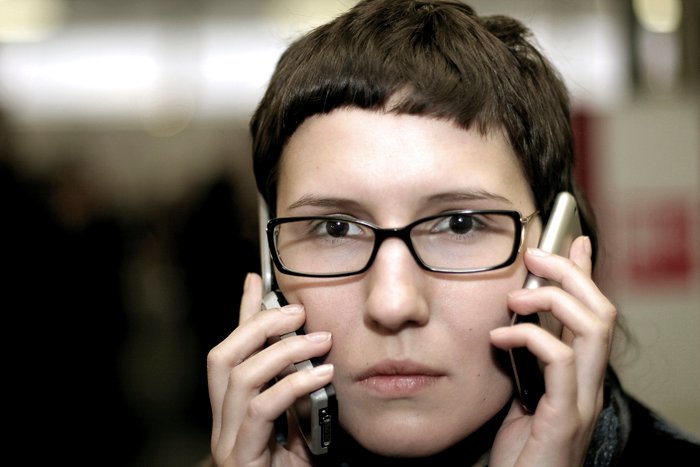
womanwithphones

As a result, we permanently have to endure these feelings of immediate danger and physiological, mental and emotional readiness, never able to relax and never able to feel at ease. Does this sound familiar?

Stress has a dramatic impact on the quality of our lives. It can cause a wide range of emotional problems including issues with anger, anxiety, addiction, panic and obsessive thoughts.  It can also affect our physiology such that we suffer from insomnia and the inability of our immune system to work effectively.

Perhaps your stress is caused by going through or the aftermath of divorce or a life trauma.  Stress can also be caused by health worries – real or perceived, by financial worries, through a whole raft of worries, through being alone or never being alone.

Do you feel overwhelmed by having too many things to do?  Have you noticed that you wake up early or in the middle of the night and can’t get back to sleep because your mind is racing?  Have you been feeling more irritable about minor things at work or at home?   If so, it sounds like there’s too much stress in your life.

You are not alone. But why not give it up?  Why not reclaim your life and start living the life you deserve to enable you to overcome your stress rapidly, leaving you physically more relaxed, mentally calmer and much more confident.

dosomethingtoday

One of the tools you will learn to adopt through coaching is to stop getting caught in the avalanche of information – much of it negative – that assaults you throughout the day and adds to your worries and therefore the stress levels.  Go on a news fast for a day, or a week.  Moderate your TV and Internet time.

Coaching tackles life stresses in a more courageous way than many stress management techniques, because it invites you to take an honest look at the fundamental cause of your stress – namely – your life.

Unlock your future by building the new foundations of your life now.  Get in touch today.

Maggie Currie

Thought Leader, Coach, Speaker, Author, Survivor
Founder of MAGGIE CURRIE COACHING

maggieheart
Website:       http://www.maggiecurrie.co.uk

Facebook:    https://goo.gl/ZByKGW
Email:            hello@maggiecurrie.co.uk

Improve your body language, improve your confidence!

The way that you move your body, and how you walk has an enormous effect on the way that you feel and affects your confidence levels.

Lets start with an exercise.

Imagine there are two people standing in front of you – one with “negative body language” and one with “positive body language”.

??????????????????????                                                            teenage depression - teen woman sitting thinking

I’d now like you to write down what you are observing with each of these people:

Positive                                                                                                                                        Negative

  • How are they standing?
  • Where are their eyes looking?
  • What position are they holding their head?
  • How are they talking?
  • How are they moving?

How you feel at any moment in time is linked to what is going on in your mind and how you are moving your body. The way that you move sends subconscious messages to your mind and this either helps or hinders the way that you feel.

Emotion is created by motion. If you sit still for a long period of time your natural energy levels automatically get lower. And what happens when you get up, walk around and return to your seat?  Yes, you have more energy and you’re given a boost.

I can’t stress how important it is to move and act confidently and positively. You will give off all the right vibes to everyone around you and it will make them think that you are confident even if you’re not feeling it inside. Yes, that’s right. Even if you’re not feeling confident, act as though you are.

So, how do you do this?

  • Walk swiftly and with a purpose. Don’t saunter along, walk like you know exactly where you are going and when you get there you mean business!
  • Gesture with your hands as you talk, it will create motion and you know what that leads to – EMOTION! The right gestures also have a major impact on building rapport as long as you’re not shaking your fist!
  • All it takes is a smile!  Think for a moment about your confidence role model. One thing that he/she and confident people in general have in common is that they all probably smile a lot and are happier than their negative counterparts. It may sound silly, but there is a lot of power associated with a smile.

Start smiling more often. Now, that doesn’t mean that you have to walk around with a silly grin on your face all of the time. But smile as you walk down the street, when you talk to someone, even when you look in the mirror at yourself. You will be surprised at how much better you will feel for it, and it will project a positive image to all others – one that will attract opportunities and people.

iStock_000006933714Medium (2)

Remember that confident people are happy people and negative people are not. Happy people are also seen as more attractive than unhappy and sad people so that is an added bonus!

You know, the way that we communicate in our appearance, posture, gesture, gaze and expression can be such a powerful tool in the way that we feel and when communicating with others. The manner in which you communicate and your interpersonal skills are also very important indeed. Effective communication is vital if you are going to succeed no matter what you are doing.

The way in which we communicate with people is broken down into component parts, and it is popularly believed that people to whom we are speaking understand what we say by interpreting these different elements in varying proportions:

VERBAL – 7% of our message is interpreted from the words we use.

VOCAL – 38% is picked up from our voice – speed, tone , pitch, rhythm etc

VISUAL – 55% is what the other person sees – our body language

Please bear the above in mind when you are communicating to people.

If you are ever feeling down, just have a look at your body language and change it immediately. Even if it has to be false – YOU WILL start to feel better and more confident immediately.

First impressions count – notice body language. You can normally tell what others are feeling by the way that they are moving and using their body too. You can use this to your advantage when you are more aware of it.

Maggie Currie

Thought Leader, Coach, Speaker, Author, Survivor
Founder of MAGGIE CURRIE COACHING

maggieheart
Website:       http://www.maggiecurrie.co.uk

Facebook:    https://goo.gl/ZByKGW
Email:            hello@maggiecurrie.co.uk

Your assertive rights

In your continuing journey of rebuilding your confidence as the real you, it is essential that you implement your assertive rights so that your life is as happy as it can be.  Being assertive is not the same as being aggressive or rude.  Your assertive rights are there to help you to stand up for yourself and continue to build your confidence in yourself.

I have included your assertive rights below and I would like you to read them and be aware that you do have the right to implement them, no matter what other people think.

teenage depression - teen woman sitting thinking


ASSERTIVE RIGHTS

  1. I have the right to judge my own behaviour, thoughts and emotions and to take the responsibility for their initiation and consequences upon myself.
  2. I have the right to offer no reasons or excuses to justify my behaviour.
  3. I have the right to judge whether I am responsible for finding solutions to other people’s problems.
  4. I have the right to change my mind.
  5. I have the right to make mistakes and be responsible for them.
  6. I have the right to say “I don’t know”.
  7. I have the right to be independent of the goodwill of others before coping with them.
  8. I have the right to be illogical in making decisions.
  9. I have the right to say “I don’t understand”.
  10. I have the right to say “I don’t care”.
  11. I have the right to say “No”.

Please read and absorb these assertive rights and then begin to implement them in your daily life.  Don’t think that other people won’t notice, they will and they will probably be surprised.  So what?

Let them get over it and continue to assert your rights on a daily basis.  It will increase your confidence and reduce the risk of you being treated as a doormat. Your life will improve and you will boost your confidence by implementing your assertive rights on a regular basis.

Not sure where to begin with asserting yourself? Get in touch today to find out how my inspirational coaching can transform first you – and then your life.

Maggie Currie

Thought Leader, Coach, Speaker, Author, Survivor
 
maggieheart
 
Contributor to BBC Radio, Vectis Radio, Susan Rich Radio
Published author and regularly write articles for national and international magazines.
 
 
Find out more about me and my ‘Why’ on my website 

Dealing with emotional and psychological abuse

I discovered that emotional abuse came from several directions.  It came from my first husband who, for years, told me that I was not clever, no use at ironing his shirts, not like his mother, not good enough to be part of his family….. and so on, and on he went.

It also came from my parents who encouraged me to stay with my first husband even though I was plainly unhappy and the marriage wasn’t working. I was told that I was far too young to know my own mind and that divorce was out of the question.

My parents-in-law agreed with my husband that I wasn’t good enough for their family and therefore I should learn how to be a good wife and do everything that I was told to do by my husband.

I dealt with this in the only way that I knew how at the time. I kept my head down, did as I was told and just plodded on through life.  I was unhappy and I couldn’t see any end to the misery that I was enduring.


I did, however, find a way out in the end. I was more and more unhappy, the marriage was just not working. My husband was diagnosed as being schizophrenic but he would not accept this.  He refused to be treated in any way and accused me of being the instigator of his supposed illness.  He was unreasonable and unpredictable and became obsessed with the idea that I was having an affair and would tell me that because I had taken five minutes longer to do the shopping than he expected I must have been meeting a man.  This was plainly ridiculous as I had three small children and the shopping to carry. I had neither the time, the energy or the inclination to do so.

This emotional and psychological abuse went on for 10 years.  In the end something clicked in my head and I couldn’t take it any longer.  I realised that this was not normal.  I had assumed that every marriage was like this.  I was wrong.

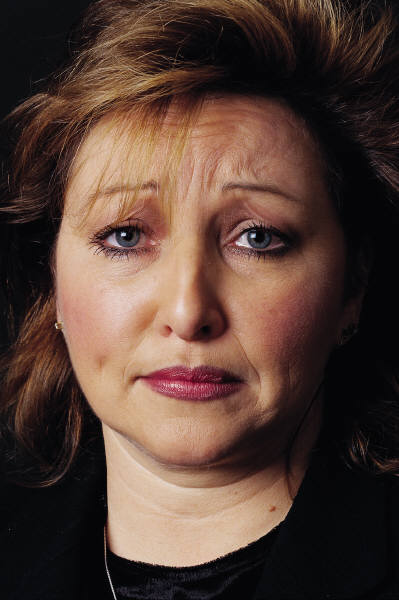
tiredwoman

I plucked up the courage to consult a solicitor who, after hearing my story, agreed that this was not normal and that I had grounds for a divorce.  I filed for divorce and it took nearly 2 years to go through as it was contested.  We all lived in the same house, but separately for that time.  After 2 years I was granted divorce and I took the children and left.  I received enough money to buy a small flat where we could live in another town twenty miles away.  A new start, in a new town, with a new flat and no emotional abuse day after day.

The feeling of relief was immense, though it took some months before stopped being overwhelmed by it all.

I am now a much different person and I won’t tolerate emotional abuse from anyone, not from my children, my parents, friends – whoever.  My husband now of 31 years would never emotionally abuse anyone and I am so very happy now.

Looking back I do realise that I allowed this to happen to me.  At the time I didn’t realise it, but now I understand. Hindsight is a wonderful thing.

20 ways to increase your confidence after divorce

So to deal with emotional abuse can be difficult and it can become impossible. If it becomes impossible for you then you have to choose whether you deserve better or not – I think you do.

So what can you do to get out of this place where you are emotionally abused?

  • Get some help from a qualified coach or therapist – make sure it is someone who understands what you   are experiencing and can relate to what you are telling them so you can begin your healing process.
    •Look online for some blogs that refer to what you are going through. Read them, make comments on them.  Open up a dialogue to help you get some answers.
    •Buy a self-help book and take some action to change the way you think about yourself.
    •Make the decision to not be emotionally abused any longer.

Get in touch today to find out how my inspirational coaching can transform first you – and then your life

Maggie Currie

Thought Leader, Coach, Speaker, Author, Survivor
 
Contributor to BBC Radio, Vectis Radio, Susan Rich Radio
Published author and regularly write articles for national and international magazines.
fbbanner
Find out more about me and my ‘Why’ on my website 


Sometimes I have feelings of inadequacy

Sometimes I have feelings of inadequacy and of not being good enough. I am not sure where they come from but I sometimes wake up feeling that way.
I remember one such occasion, I went to a breakfast business networking meeting, one I went to every Thursday morning at 7am, which meant getting up at 5am to be showered and dressed ready for business by 6.15am at the latest. Then a 10 mile drive.

Usually these meetings were full of energy and fun and a pleasure to be at, but on this day it was a little different. One of our members had split with her significant other and moved off the Island and is now living with her parents on the mainland. This person will be sadly missed as she is vibrant, honest, straight talking and fun. So there was an air of sadness that she had suddenly gone.

There were also some people there who were revelling in this news and making stupid comments, which I tried to ignore, but they were so unnecessary and I thought it was shameful. I said nothing as I didn’t want to get into a stupid argument.

Business people communicating with each other against white

When the meeting finished I took some items to the DHL drop point to send around the world, as I do several times a week with my secretarial business. This should have taken about twenty minutes but ended up taking nearly an hour because the computer system wouldn’t let them put in the address and postcode I had for one item going to China, and a call to the helpdesk was needed and this took forever. The lady who served me is also one of those people I try to avoid as she drains all the energy from me and is very critical of every one and every thing.

So instead of getting back to my office by 9am to get stuck into my work, I didn’t get back until nearly 10.30 and then I was all behind and annoyed that things didn’t work out.

I sat and thought about what it was that was making me feel inadequate. Not the fact that I was late getting back to the office. Not the fact that we had lost a great member of our networking group. So what was it? And then it came to me.

telephonedial

The night before I had been on a fabulous phone call with two coaching colleagues. The creativity and ideas were flowing from them, and what brilliant ideas they were. I am in awe of their power to think these things through so easily and clearly.

So, I believe that I was feeling inadequate because I had absolutely nothing to add to these two brilliant coaches’ thoughts and ideas. They had done their homework fantastically and presented their ideas and innovations in clear and concise ways, and they were great ideas and I know they will work.

I feel that my strengths lie elsewhere, but at that particular moment I wasn’t sure where.

I hate feeling this way and it makes me really upset to think this way. I know that I am a brilliant coach and that I do make a huge difference to people’s lives and that I will continue to do so.

Having written all this I felt much better and know that I have a lot to offer but not necessarily in the same way as other people.  I also know that I should not compare myself to other people, that is definitely a confidence killer.

tips

So, to re-boot my confidence I have written a list of my creativity and innovativity (is that a word?) and here is the list I have come up with:


My creativity 

  • Superb coach
  • Brilliant cook
  • Expert typist
  • Can set out a document by eye, and it will look great on the page.
  • Brilliant writer and author
  • Fabulously intuitive
  • Do my accounts satisfactorily
  • Create a good workspace
  • Create opportunities for clients
  • Create opportunities to get clients
  • Great supporter
  • Impactful
  • Great teacher
  • Create achievable goals for my clients and for myself


My Innovativity

  • Build relationships online and in person
  • Think up new ways for my clients to succeed
  • Find new ways for me to succeed
  • Lead by example
  • Positive and encouraging to all
  • Hear beyond the words

If this hits home to you then please feel free to contact me.  You are not alone.  I would love to talk with you and help you to learn how to be more confident in yourself.  As we all know, life is a school and we are constantly learning.  I really do look forward to hearing from you with your lists of creativity and innovativity. Get in touch today to find out how my inspirational coaching can transform first you – and then your life

Maggie Currie

Thought Leader, Coach, Speaker, Author, Survivor
 
Contributor to BBC Radio, Vectis Radio, Susan Rich Radio
Published author and regularly write articles for national and international magazines.
fbbanner
Find out more about me and my ‘Why’ on my website 


Be a surfer – riding the incoming waves of information

In this modern world, the 21st century,  we are living in an information age. It is very easy to become overwhelmed by the constant influx of scientific studies, breaking news, and even spiritual revelations that fill our bookshelves, radio waves, Internet pages and in-boxes.

No sooner have we made a decision on what to eat or how to think about the universe than a new report, video or book comes out confounding our well-researched opinion.

After a while, we may very well be tempted to dismiss or ignore new information in the interest of stabilising our point of view or preventing overloading our brains, and this is understandable.

iStock_000005391990XSmall (2)

Rather than closing down and ignoring what could be vital information, we might try instead to remain open by allowing our intuition to guide us.

For example, there is a plethora of contradictory studies concerning foods that are allegedly good for you and foods that are allegedly bad for you. At a certain point, though, we can feel for ourselves whether, for example, coffee or tomatoes are good for us or not.

The answer is, of course, different for each individual, and this is something that a scientific study can’t quite account for. All we can do is take in the information and process it through our own systems of understanding.

In the end, only we can decide what information, ideas, and concepts we will integrate. Remaining open give us the option to change and shift by checking in with ourselves as we learn new information. It keeps us flexible and alert, and while it can feel a bit like being thrown off balance all the time, this openness is essential to the process of growth and expansion.

intuition

I think the key is realising that we are not going to finally get to some stable place of having it all figured out. After all, we are always learning. Throughout our lives we will go through the processes of opening to new information, integrating it, and stabilising our worldview. Our intuition is vital for this process. As soon as we have reached some kind of stability, it will be time to open again to new information, which is inherently destabilising.

Maybe, if we see ourselves as surfers riding the incoming waves of information and inspiration, always open and willing to attune ourselves to the next shift, we will see how lucky we are to have this opportunity to play on the waves and, most of all, to enjoy the ride whilst we are learning.

If any of this resonates with you, and you would like some help understanding how your intuition works, get in touch with me and we can have a free 15 minute chat.

Maggie Currie

Thought Leader, Coach, Speaker, Author, Survivor
 
Contributor to BBC Radio, Vectis Radio, Susan Rich Radio
Published author and regularly write articles for national and international magazines.
fbbanner
Find out more about me and my ‘Why’ on my website 

Your wedding day – do you have to conform?

I have spent many years helping my hubby out at weddings and wedding fairs.  He is a mobile DJ and does a lot of work at weddings, besides all the usual parties for 18th, 21st, 50th birthdays and of course anniversaries. I have been to hundreds of weddings over the past 10 years.

The wedding industry is huge and caters for everything you could possibly think of to help make your day the best day of your life.  There is something for everyone at the wedding fairs – wedding dresses for brides, suits for the grooms and their entourage, dresses for bridesmaids, outfits for page boys, dresses for mothers of the brides.  There are venues, photographers, videographers, photo booths, florists with fresh flowers, florists with silk flowers, decorations for the tables, balloons for arches, makeup artists, hairdressers, barbers, lingerie suppliers, marquees, tableware, furniture, caterers, waiting staff, bars (either dry or wet), dance floors, bands, discos, karaoke – to name but a few.

And one thing I have noticed over the years is that there is a huge amount of pressure on the brides to conform.  I say the brides, although it could equally be the grooms at a same sex wedding.  In general, wedding fairs are organised and aimed at the brides and the mothers of the brides.  Often it is the mother of the bride who has the expectations for a wedding for her daughter.

There is pressure to have the right wedding dress, the right venue, the right wedding breakfast, the right buffet, the right music, the right wine/champagne, to invite the right people and so on.

groom

I have attended many weddings where everything is just the same as the last one.  It all happens in the same order –  a bit like a conveyor belt.  Bride and groom come in one end, perform all the ceremonies, appear at top table, make speeches, cut the cake, do first dance, party and then go off on honeymoon.

And the pressure is on for your wedding to be better than the last one you went to.  Or better than your best friend’s or better than your mother’s best friend’s daughter’s wedding.  And so on.

If what I have described is exactly what you want for your wedding, go ahead and do it.  It may be your dream wedding, the one you have been yearning for since you were five years old.  If that is the case, enjoy your day safe in the knowledge that it is exactly what you want.  After all it is your day.

 But does it have to be that way? No it doesn’t. What if you want something more relaxed, lower key, less pressured, more simple or just completely different?

Go for it!

I have attended a couple of weddings where the whole thing was relaxed.  At one the bride and groom wanted to emulate a beach party.  They hired a hall with a piece of land outside.  The bride and groom wore ‘beach wear’ – she was in a smart, summer dress, he was in casual trousers and Hawaiin type shirt.  The men on the top table had straw hats and light jackets.  The rest of the guests were in smart, casual beach wear.  The table decorations were simple with a circular mirror on each which had pebbles and sand on them, a little candle and that was it.  The table names were all referred to something to do with the sea or the beach.  The food was a hog roast outside, the bar was a trestle table stocked with cans, bottles etc., which the guests helped themselves from.  They all had a great time and were relaxed.

iStock_000006933714Medium (2)

At another reception, the bride wore a very smart, short dress and the groom wore smart trousers and a jacket.  The guests were all in casual clothes, the food and bar were organised by the family and a great time was had by all.

There was no pressure to conform, no pressure to look the same or better than someone else, no pressure to provide the best food.  They had a perfectly relaxed and enjoyable day.

At another wedding, the couple each had children and grandchildren, they wanted them all to be involved and invited them all to be bridesmaids, ushers, page boys and the day was loosely planned, but they went with the flow.  When the little grandchildren wanted to play, they played.  Once the wedding ceremony was completed, the reception carried on in a way that was good for everyone.  All the formalities were completed and the rest of the time, the party went on with everyone involved.

If you want to be married in the forest by a friend, you may have to do the legal bit first in a Register Office, but you can have the ceremony you want, where you want, with whom you want without the need to compare yourself or your wedding to anyone or anybody else’s.

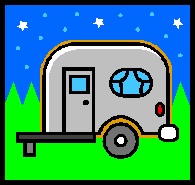
Why not spend the weekend at a vintage caravan site, hire a small marquee, hire some sound gear and speakers, put on the music from your ipod, get some deckchairs, a barbecue and your friends and have a party outside.  Be relaxed, really enjoy the day and the company.

caravan

Invite the people to your wedding who you really want to be there.  If you don’t want Great Aunt Vi to attend, then don’t invite her.  If you want to have a small wedding with only a handful of guests, do just that.  It is your day. No matter what sort of wedding you have, there is bound to be someone you don’t to be there and who you fear you will offend.  Let them be offended.  It is your day – have the day that you want.

Some people go off to another country to get married on the beach.  The couple go without any guests and enjoy the ceremony on their own terms.  But then they have a party when they come back and invite those they want to help them celebrate.  Do that if you would like.  The reception can be as large or as small as you want.

Remember it is your day.  Have the wedding you want, not what somebody else wants.  If you are happy on your wedding day and everything is as you have planned, you will enjoy it so much more, the memories you create will live with you forever.  Be yourself, have what you want and don’t have what you don’t want forced upon you.

If any of this resonates with you, and you would like some help building your confidence and gaining the courage to stand up for what you really want, get in touch with me and we can have a free 15 minute chat.


Maggie Currie

Thought Leader, Coach, Speaker, Author, Survivor
 
Contributor to BBC Radio, Vectis Radio, Susan Rich Radio
Published author and regularly write articles for national and international magazines.
fbbanner
Find out more about me and my ‘Why’ on my website 

Do you have relationship anxiety?

Relationship anxiety is very destructive, as you know. If you don’t learn how to get rid of anxiety in your relationship, it leads into a very devastating downward spiral:

One of the first things you will notice is that you become suspicious – you begin worrying about your partner not loving you, or not caring as much as you do. Thoughts of them being unfaithful. Many more self-destructive thoughts and emotions. And of course, all of these will fuel your relationship anxiety.

In order to learn how to get rid of anxiety in your relationship, think about what you can do:

Ask your partner for reassurance. When you find yourself becoming suspicious in your relationship, try to remember that it is probably being fueled by your anxiety. You may be able to get some relief from your relationship anxiety by asking your partner for occasional reassurance. They will be happy to give this if they are patient and understanding of your anxiety.

This kind of support may well be very helpful to you. Ask a trusted friend who is prepared to give you an honest answer if there might be some real reason for you to feel this way. But even when you get that real information, it may not help alleviate your relationship anxiety. You will have to work on that yourself. Perhaps your worry is that you feel that you are too “needy” in your relationship.

For instance, do you need constant reassurance and want your partner to regularly prove that things are really okay? This will inevitably put pressure on you and your partner and will add to the relationship anxiety.

A grateful attitude helps in times of extreme stress
I got married when I was 19 years old and discovered after about six months that I had made a terrible mistake. I was under a lot of pressure from my parents to stay in the marriage as it was not ‘the done thing’ to separate or divorce. In their opinion, I was far too young to know what I was doing. I believed them as I knew nothing different and so I tried to make the marriage work.

Inevitably the pressure of trying to make it work instead of figuring out how to get rid of anxiety in my relationship made me very unhappy and anxious indeed. I stuck at it until I couldn’t take it any longer and I made the decision to leave, take the children, and strike out on my own. That was the right decision for me, and the anxiety was lifted almost as if a huge weight had been taken off my shoulders.

If any of this is resonating with you, then you will need to find ways to cope with your anxiety and learn to rely more on yourself for feeling better – taking the pressure off your partner. This will allow you to become more self-sufficient, even in your anxiety. Give yourself permission to reassure yourself instead of turning to your partner for comfort each time you are anxious. Find ways to learn to think more positively. Try being grateful for what you have.

When you are anxious you can create all kinds of ideas in your imagination that appear so intolerable that you feel compelled to take impulsive and totally misguided actions. You will find yourself:

  • Jumping to conclusions
  • Making decisions that are destined to fail
  • Behaving in a totally childish manner, sulking and demanding attention.
Look for solutions that will relieve your relationship anxiety and won’t result in increasing your problems further. 

When you are anxious your partner will be anxious too. It becomes a vicious circle and the anxiety is fed constantly.
concept

Learning to trust your intuition is an important part of reducing your anxiety. So, slow down, think through anything you are considering doing and follow your intuition. Make the effort to stop listening to that nagging voice that is telling you something is wrong. It is very likely when you slow down and think rationally that you will find a much better solution for you and your relationship. In this way, you can successfully get rid of anxiety in your relationship.

Maggie Currie

Thought Leader, Speaker, Author, Survivor
 
Contributor to BBC Radio, Vectis Radio, Susan Rich Radio
Published author and regularly write articles for national and international magazines.
fbbanner
Find out more about me and my ‘Why’ on my website 

Looking after YOU first.

How do you respond when someone makes a request of you and it really is not something you want to do?

I suspect you try and search for an excuse, such as I am busy that day, I have to wash my hair…..and all these excuses seem very lame to you. And so you say yes, against your better judgement.

BUT, what if you could respond confidently to the request? What if you could say no without guilt?

tips

The question has just been posed.  Pause.  Were you going to say yes, even though there’s a voice deep down saying “no”?  What possible reasons could there be for saying no?

  • It’s beyond your means?
  • It’s beyond your comfort level?
  • You have no interest?
  • You have to wash your hair?

Identify all the reasons you have for saying “no.”  Identify which stem from a lack of confidence, which would be detrimental to you and which come from a sincere disinterest in fulfilling the request.

What would happen if you said yes?  Perhaps:

  • You would be considered ‘one of us’
  • It would make your friend happy
  • Your visibility with other people may be improved
  • It would make you miserable

Would you feel comfortable with your self if you were to say yes, even though you knew it would not be in your best interests?

Saying “no” is hard for so many of us.  A false sense of guilt often comes into play.  Whether this guilt has its foundation in religion, a proper upbringing, or a world view that simply says “it’s not nice to say no”, we know it is there lurking in the background and make decisions  based upon it, even though deep down, we know it is not right for us.

New for 2013. From confusion to clarity – Becoming ME again


So you have made the decision, after scientifically weighing the results of your cost/benefit analysis, to honestly say “NO”.  Practice it in the mirror. Say it clearly and self-assuredly.….in the mirror.  Look yourself in the eye, and do it.  Just say “NO.”

Say it like you really mean it, and then say it again as if you speaking to whoever asked you the question.  When you pretend you’re speaking to the person who made the request, does it come out differently?  Practice and experiment with different ways to say “NO” until you find one you’re comfortable with.

Then go, and say “NO.”

Sometimes, if you have always given in to others,  guess what happens?  After all that practice, getting the tone right and pretending you are talking to the person who asked you the question, you may just be surprised to find that they are not willing to accept it!   They may try to push you to say yes, rephrase the question, or make a new, not altogether different, request.   This is where your personal boundaries come in to play.

Know your boundary—what ARE you willing to do?  Revisit the questions you asked yourself before. If you are really serious about saying “NO”, then stick to your guns.  Tell the person making the request that you would appreciate it if they respected your wishes and boundaries, and ask them not to ask again.  If you are comfortable expressing your “reasons why” then do so speaking from your personal perspective.

If you are going to say NO, you must say it in a way that means NO!  In a firm, yet polite voice with a firm tone.  Also, if you want to say the reasons why, keep it short and sweet.  When saying NO remember the power of non-verbal communications.  Look the person in the eye when you say the NO.  Shake your head at the same time as saying NO.  Stand up tall.

Don’t forget that when anyone asks a question of you, it is perfectly OK to say, “Can I think about that and get back to you”.   No-one should be pressurised into giving an immediate answer.  It will give you some time to think it through and to gather your thoughts.  It will also give you some time to think about how you are going to say it, the words to use and your body language.

iStock_000004418879XSmall (2)

Practice makes perfect as they say!  Remember you must look after yourself first.  This is not selfish, it is a necessity. Practice in the mirror and soon you will:

  •  feel much more confident and proud.
  •  find that practice makes perfect—the more you confidently say “NO” the easier it becomes.
  • Others will respect your wishes and take you seriously the first time you say “NO.”
  • You won’t find yourself doing things you never wanted to do in the first place.
  •  have more time to focus on the things you do want to be involved in.
  • The list goes on from there…

I have learned  how to look after myself first and how to say no without guilt.  I have learned that my boundaries are vital to my day to day living and that once people are aware of those boundaries they respect them and me.  That isn’t to say that I always say no, I know when to say yes and when to say no.

So if you’re looking to finally take control of your life and make a change, why not drop me a line and we can talk it through.

To book in for a FREE 15 minute discovery call please Email me.


Maggie Currie

Thought Leader, Speaker, Author, Survivor
 
Contributor to BBC Radio, Vectis Radio, Susan Rich Radio
Published author and regularly write articles for national and international magazines.
fbbanner
Find out more about me on my website.


Why do people stay in abusive relationships?

There are many, many reasons why women and men don’t leave an abusive relationship.  Often it is because they don’t realise that they are being abused.  They think it is normal.  I know from experience that I believed the emotional, psychological and financial abuse I suffered was normal.  I thought everyone’s relationship worked in this way.  It wasn’t until I literally woke up one day and thought ‘this is n’t normal’ and started really looking at other people’s relationships that I realised I was in an abusive relationship.

I went and consulted a solicitor who agreed that not only was this an abusive relationship but I had grounds for divorce.  Unreasonable behaviour. And so I took my courage in both hands and filed for divorce.

What is an abusive relationship?

One where you are treated in one or more of these ways:

Manipulated – Have their will imposed on you so you do as they say without realising it

Controlled – told what to wear, what to do, where to go, where you can and can’t work, who you can and can’t speak to

Insulted – in private and/or in public

Treated as a possession

Told that everything is your fault

Deprived of money – only allowed so much a day not allowed your own income

Deprived of friends – not allowed to have friends

Only allowed a mobile phone as long as you only call the abuser and they control the bill

Psychologically mistreated – made to feel worthless

Emotionally mistreated – constantly told you are useless and nobody wants you

Physically – beaten, burned, tortured

Sexually – raped, made to perform acts you don’t want to, made to be part of a threesome

Verbally – shouted at, berated in front of other people, made to feel small and inadequate

Held prisoner/locked up

Made to have meals on the table at specific times and threatened with various consequences if they don’t appear on time.

Interestingly in 1995 a national survey showed that just under 50% of abusers are in fact female.

I believe that most of the reasons that people don’t leave abusive relationships, once they realise what it is, stem from fear.

Most of the fears are understandable, but often irrational.  For instance, fear of having no money if they leave.  Because women are generally at home looking after the children, they don’t have any income of their own.  The fear of financial ruin builds in the mind until it becomes ‘I can’t survive if I leave’. And so they stay.

Fear of losing the children. If a man has been abused he may find it very difficult to leave with the children.

worriedman

Most of the fears are understandable, but often irrational.  For instance, fear of having no money if they leave.  It may be they don’t have any income of their own.  The fear of financial ruin builds in the mind until it becomes ‘I can’t survive if I leave’. And so they stay.

Fear of what other people might think.  There is often a social stigma that labels people as failures if they dare to leave their partners.  Usually nobody outside the home realises what is going on which adds to that stigma.  This leads to feelings of insecurity. And so they stay.

Fear of what might happen to them at the hand of their partner if they did leave.  Often people believe that their partner will come after them and kill them and/or their children. The threats are made to them over and over again, until they are ingrained in their mind.  And so they stay.

People often fear that they are the reason that they are abused.  That it is their fault. And if they were to change their ways their abusive partner would be different.  A false supposition.  And so they stay.

Of course, the abuser will tell their partner that they will change, they won’t do it again. But they do. They never change.

worried

I know how difficult it is to leave an abusive relationship.  I was verbally, emotionally and financially abused by my first husband. He would belittle me in front of the children and other people, always tell me that I knew nothing, that I was of no use and he would do anything to stop me succeeding at anything.  Add to that the fact that my parents believed that I should make the marriage work because I was too young, in their opinion, to know what I was doing, and I was financially dependent. And so I stayed.  I stayed 10 years.

I did, eventually, wake up to the fact that it was not normal to be treated in this way, and found the courage to leave and take the children with me and started a new life in a different town.  The feeling of relief was immense.  Although I was threatened with all sorts of things, such as having the children removed, losing my flat etc., I discovered that the threats were empty.  And this is probably true of most abusers.  They are cowards and when someone actually stands up to them, they generally back off.

There are ways out of this horrendous situation.  There are both men’s and women’s refuges who will help you so that you can get yourself out of the abusive home.  Once you are out and can think about what options there are for you, there are counsellors and life coaches who can help you see yourself as you, the real person, and not a punch bag.

There are various organisations who can and will help you to start your new life. Social Services and the Police will work together to ensure that you are safe and help you to move on with your life. They will give you respite and guidance in a safe environment. There are solicitors, the Samaritans, Citizens’ Advice, Relate and they can all point you in the right direction for help. Schools will have contacts if you are worried about your children. There is a whole lot that can be done for you once you are out of the abusive situation and in a safe place. There are protocols that can be introduced and put into action for you.

tiredwoman

There are trusted friends and family who may be able to help you too.

If I had known about life coaching back then I would have been first in the queue.

There is no reason good enough to actually justify staying in an abusive relationship.

It can be hard to admit that you are in an abusive relationship.  But if you think you are being abused and you are unhappy, get out of that relationship as soon as possible.  Take your courage in both hands and make the leap.  Often men find it much harder to admit to being abused than women do, but I believe they are just as justified as anyone else.  There is help out there for everyone.

Do you want to remain stuck and miserable? If your answer is no, find your way to get out and start your new life on your own terms.

Remember, the relationship has failed, not you.  You are not a failure.

If you would like to chat confidentially about your situation, contact me hello@maggiecurrie.co.uk


Maggie Currie

Thought Leader, Speaker, Author, Survivor
 
Contributor to BBC Radio, Vectis Radio, Susan Rich Radio
Published author and regularly write articles for national and international magazines.
fbbanner
Find out more about me on my website.